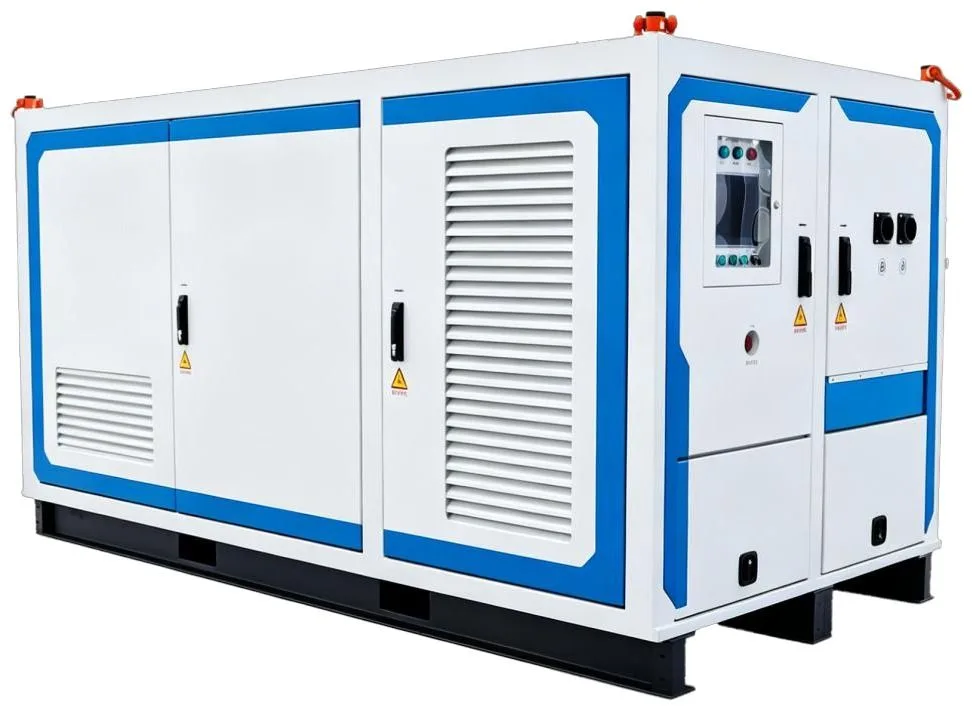
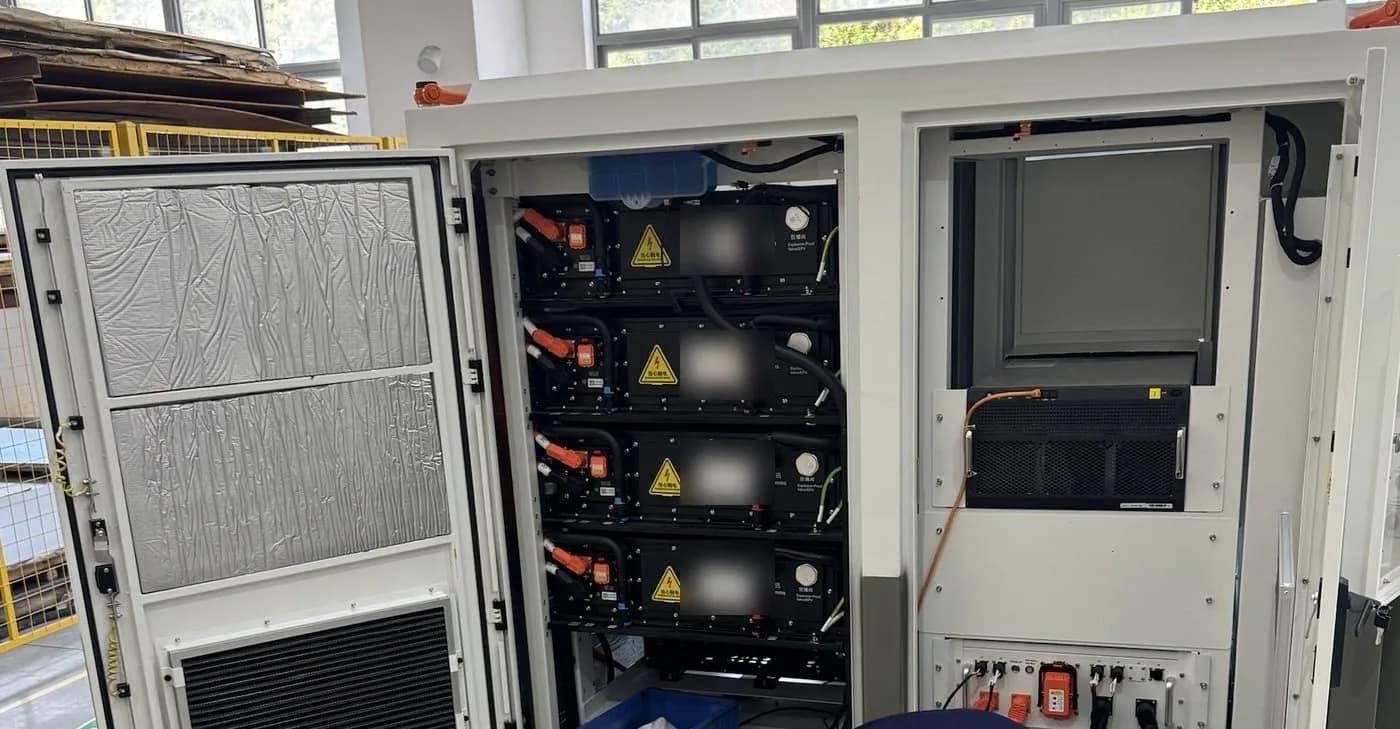
NV-M and NV-C mobile storage from 250 kWh to 4 MWh: instant backup power when the grid fails, hybridisation of an existing generator set, less diesel, fewer engine hours, less servicing.
1 millionhomes lost power, nearly 4,000 for over a week (Storm Arwen, 2021)
Up to 90%of sites dry in some forecourt groups (September 2021)
200.01pa litre of diesel, UK record (October 2026)
What happened
Storms, snow, grid failures, fuel shortages, diesel prices: recent events in the United Kingdom that cut off or drove up the cost of energy on sites, from the most recent to the oldest.
Diesel price shock
Diesel: all-time record above 2 pounds a litre
United Kingdom
200.01p a litre on average, previous record 199.09p (June 2022)
Duration Ongoing
Conflict in the Middle East since 28 February 2026, shipping disrupted in the Strait of Hormuz. A 55-litre tank costs 110.01 pounds, 31.70 pounds more than on 28 February.
Duration Heathrow closed for most of 21 March, full operations on 22 March
A transformer bushing failed, most likely after moisture entered it, and the transformer caught fire. The loss of one of the airport's three supply points cut power to critical systems.
Duration Nearly 4,000 homes off supply for over a week
Winds and falling trees brought down overhead lines. 82% of customers were restored within 24 hours; network companies paid around 44 million pounds in compensation.
Up to 90% of sites dry in some forecourt groups, about 50% in large groups
Duration From late September into October 2021
A shortage of HGV drivers cut deliveries to filling stations, made worse by a surge in demand. Fuel stocks at refineries and terminals remained normal.
More than 1 million consumers disconnected (an estimated 1.1 million)
Duration All customers reconnected within 45 minutes of the lightning strike; rail delays lasted much longer
Lightning on a 400 kV line, then the loss of two large power stations, triggered automatic demand disconnection. Trains stranded, Newcastle airport, two hospitals and water treatment works affected.
These events are public and sourced. We keep them up to date.
Outage simulator
How long can my site last without the grid, and what does each hour of downtime cost me?
Assumptions: energy delivered = capacity × 90%; default peak = 1.5 × the power maintained; a model is excluded if the peak exceeds its continuous power; grid charging at 43 kW (63 A), 70 kW (100 A), 170 kW (250 A) or 280 kW (400 A); generator set: 0.03 L/h per rated kW at no load, plus 0.21 L per kWh produced, charging at 85% of its rating. Sizing to be confirmed on your load profile.
Model
Runtime
For 8 h
NV-M250
5 h 38
Not enough
NV-M500
11 h 15
✓ Recommended
NV-C1000
22 h 30
✓ Covers the outage
NV-C1300
29 h 15
✓ Covers the outage
NV-C3000
67 h 30
✓ Covers the outage
An outage of 8 h costs you ≈ £3,600; the NV-M500 covers it entirely.
Full recharge of the NV-M500 on a 63 A grid supply: 11 h 38.
On most sites, the generator set runs all day for an average load of 20 to 30%. It burns diesel idling, fouls up and piles up engine hours.
With an NV-M, the unit powers the site. The generator set only starts to recharge it, two to three hours a day, at 85% load, where it consumes the least per kWh, then it stops.
Underloading is expensive.
A generator set at 25% load burns about 0.33 L per kWh produced, against 0.25 L at 85%. And it fouls up: glazing, injectors, particulate filter.
Engine hours mean servicing.
Oil change every 250 to 500 h, wear parts, downtime. Dividing the hours by three divides the servicing by three.
No interruption.
The NV-M takes the load in less than 20 ms; the generator set then starts without a jolt. No more voltage dip at changeover.
The grid when it is there.
If a 63 or 100 A grid supply is available at night, the generator set no longer runs at all: it stays on standby.
Hybridisation simulator
I have an X kVA generator set; what does hybridisation save me per year?
Starting prices: averages in the United Kingdom, replace them with yours.
3,590litres of diesel avoided per year
£10,128saved per year, net
1,726engine hours avoided per year
9.5t of CO₂ avoided per year
Your site consumes 200 kWh per day, estimated peak 30 kW.
The generator set goes from 2,500 h to 774 h per year, at 85% load instead of 25%.
Diesel: 16,500 L per year for the generator set alone, 12,910 L in hybrid mode (−21.8%), that is £7,108. Servicing avoided: £3,021. Grid electricity: £0.
Your main gain: engine hours (−69%) and quiet; with a grid supply, diesel disappears.
Return on investment: contact us with your figures.
Assumptions: 0.03 L/h per rated kW at no load + 0.21 L per kWh produced; servicing £1.75 per engine hour; 2.65 kg of CO₂ per litre; editable above. The generator set recharges the unit at 85% of its rating, charging efficiency 95%; the night-time grid charges for at least 8 h. Sizing to be confirmed on your load profile.
Four typical sites
Calculated with the same formulas as the simulators. The inputs are shown: open the case in the simulator to change it.
Building site with welfare units
Inputs
100 kVA generator set, 25% load over 10 h of daytime, welfare units at 8% over 14 h of night-time, 250 days, no grid.
Result
NV-M500: 10,910 L of diesel and 4,879 engine hours avoided, £30,141 net.
Pumping or wastewater station on backup
Inputs
60 kW to maintain, 24 h outage, existing 100 kVA generator set.
Result
Outage of 24 h: £10,800 of downtime avoided.
On its own, the site would need the NV-C3000. With the existing generator set in hybrid mode, the NV-M250 is enough: unlimited runtime, the generator set only runs 88% of the time.
Cold storage warehouse
Inputs
150 kW of critical load, 12 h outage, downtime at £1,750 per hour.
Result
Outage of 12 h: £21,000 of downtime avoided.
The NV-C3000 covers it on its own.
Three-day festival
Inputs
250 kVA generator set, 40% load over 14 h of daytime, 15% over 10 h of night-time, 3 days, no grid.
Result
NV-C3000: 227 L of diesel and 46 engine hours avoided over the 3 days, £529 net.
Why the NV-M
Latest-generation LiFePO4 cells, identical modules across the range.
No overload, but 4 wires and neutral at 400 V three-phase.
Air-conditioned cabinet, from −20 °C to +50 °C.
Charging from 43 to 70 kW on the grid, or DC charger.
From 250 kWh to 4 MWh, from skid to container.
On-site commissioning and maintenance, one NV Power Station contact for each region.