Solutions

Offshore and industry

Confined spaces, off-grid sites, strict procedures.

Offshore and industry
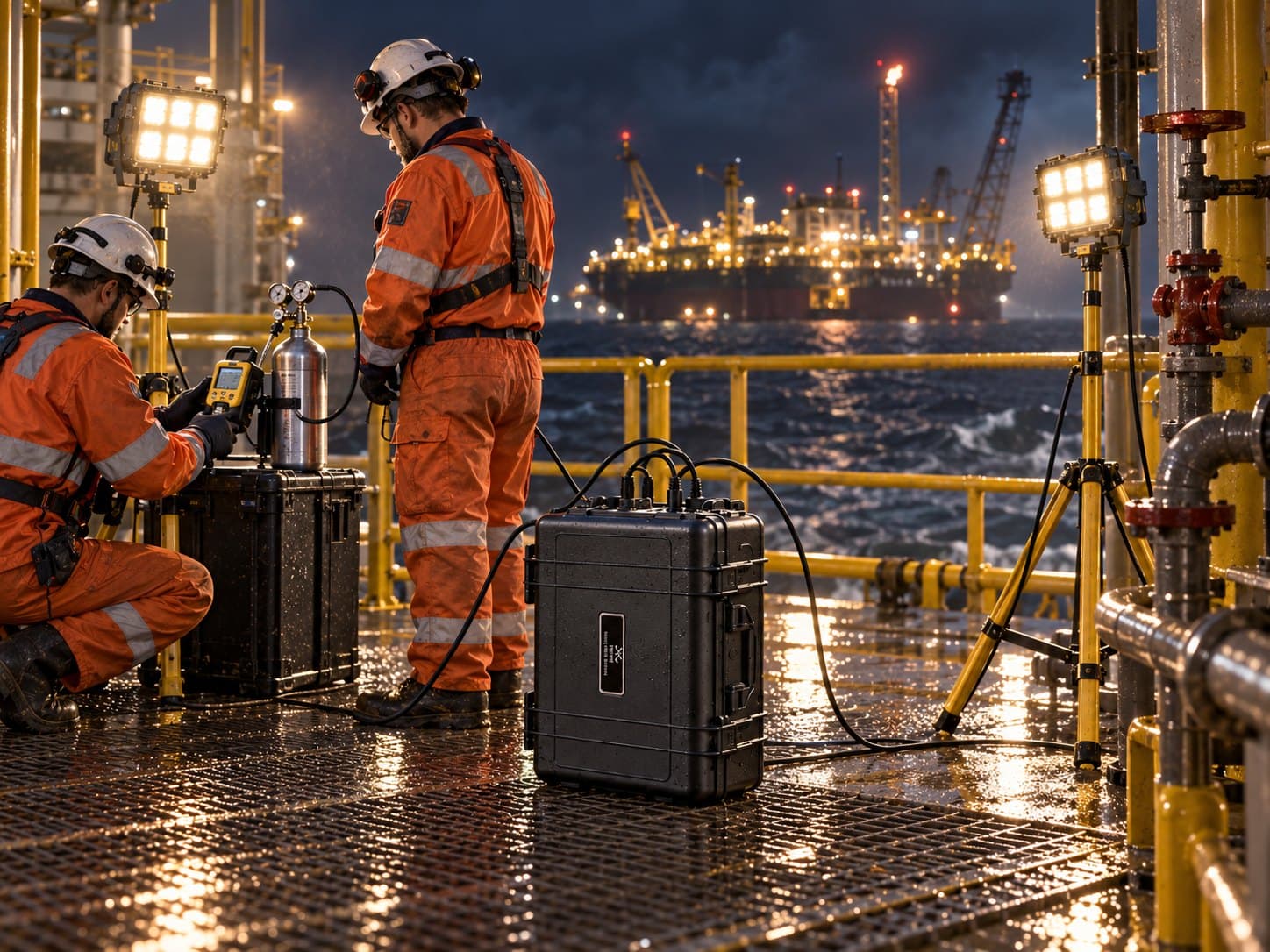
Illustration: not a contractual representation.

The need, the answer

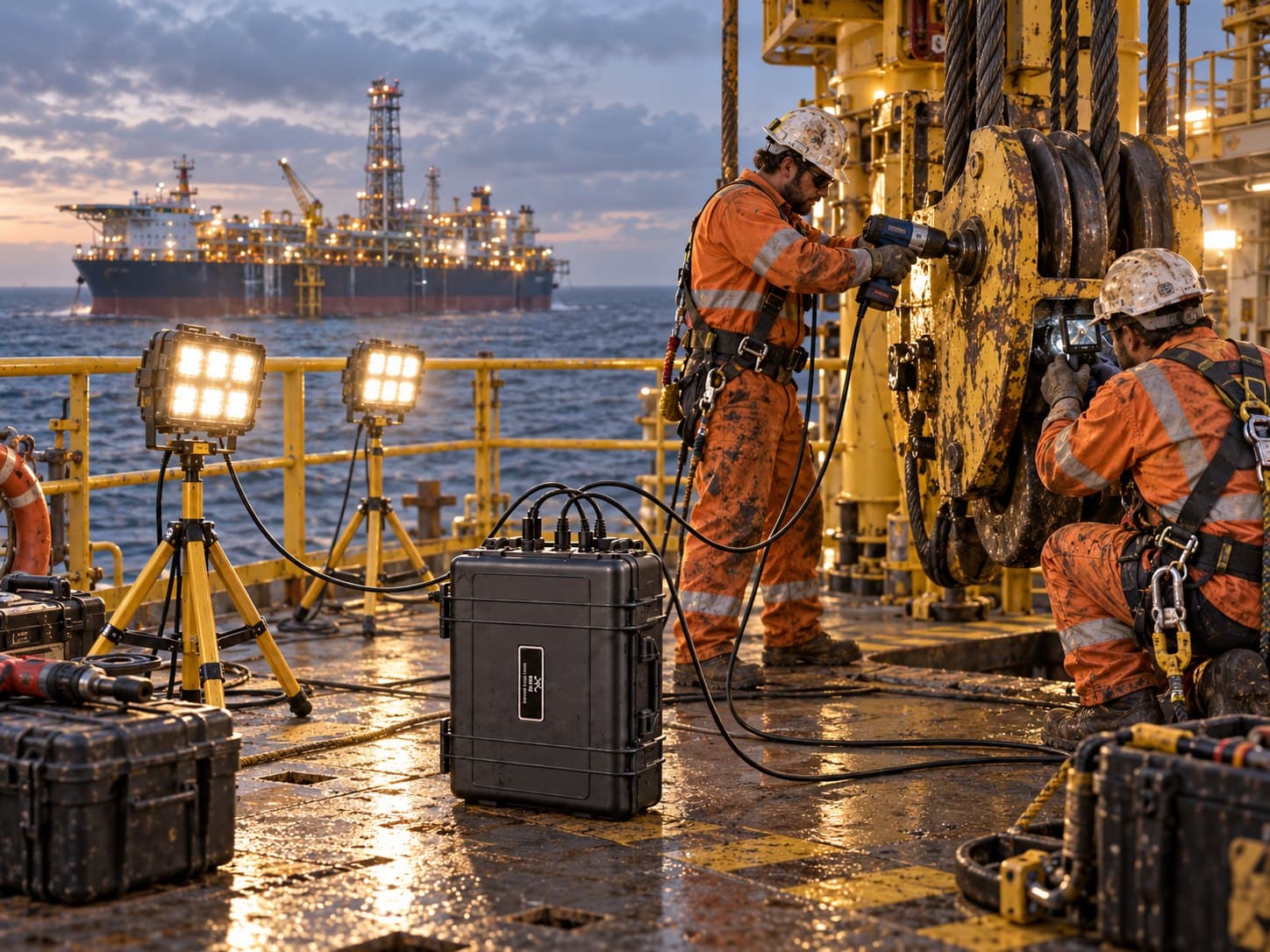
Platform, shipyard, tank, tower, service tunnel: a combustion engine is prohibited there, or unbearable. The lithium station is the accepted source (no CO, no flame, no engine).

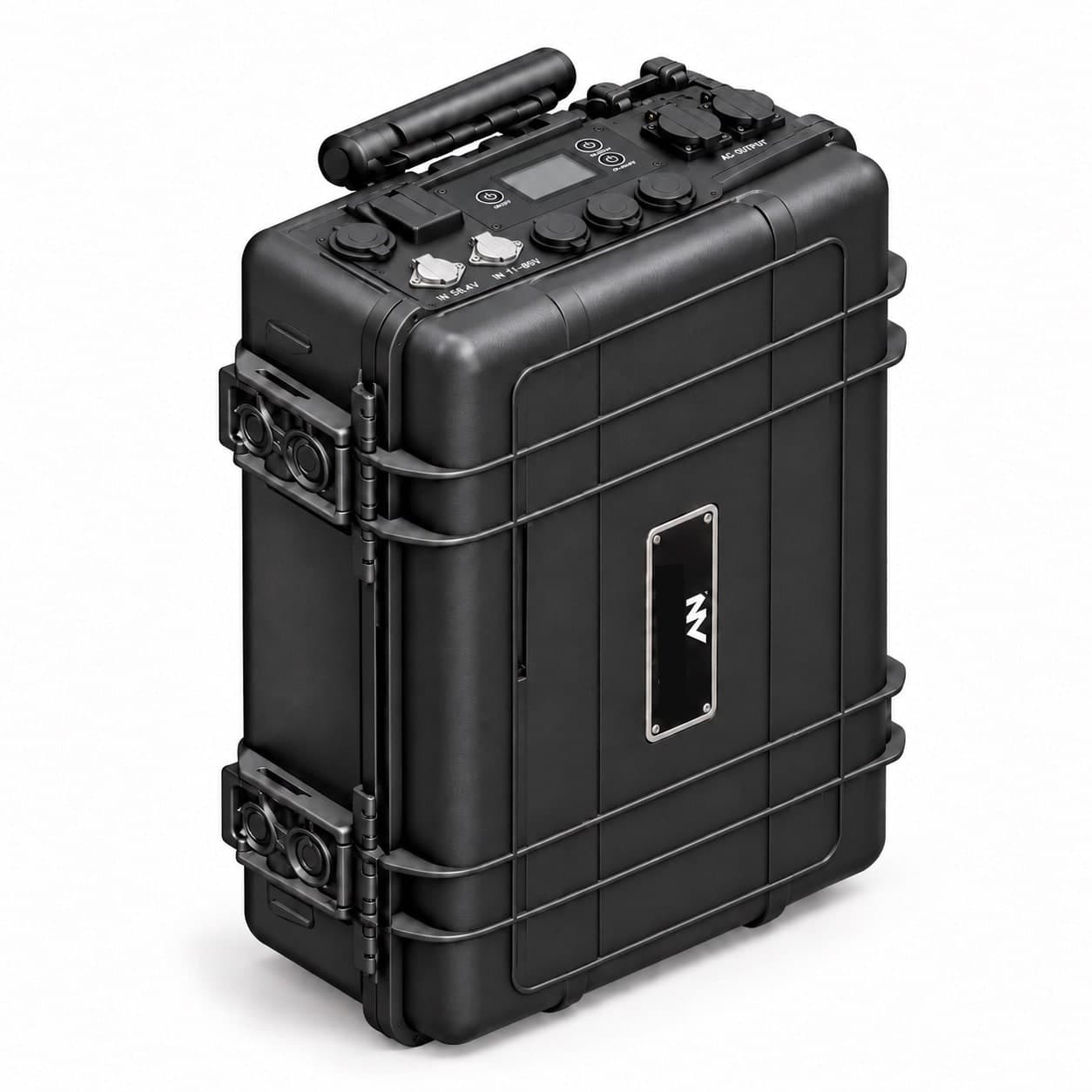
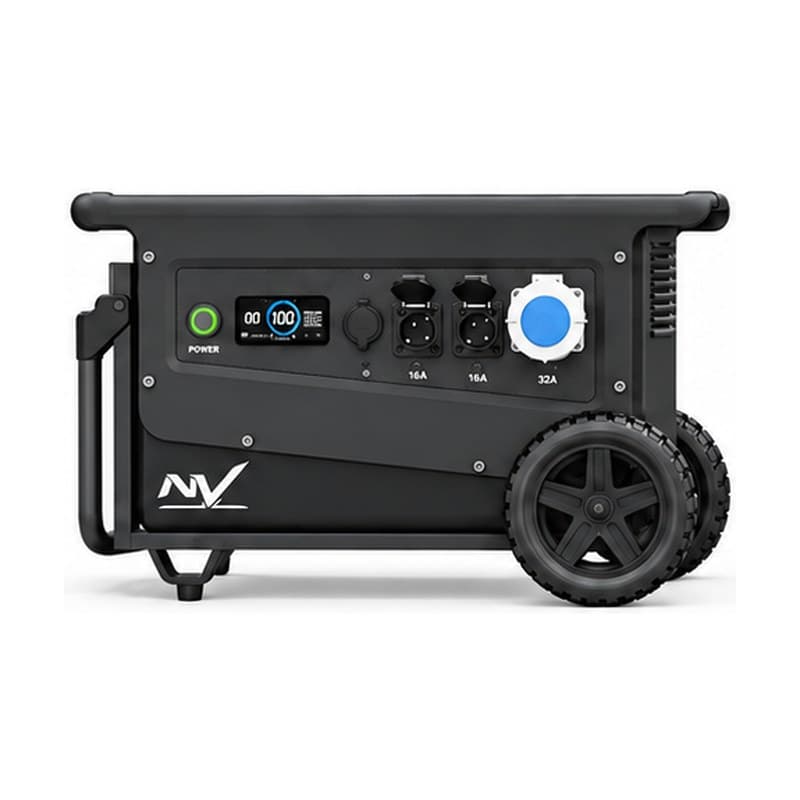
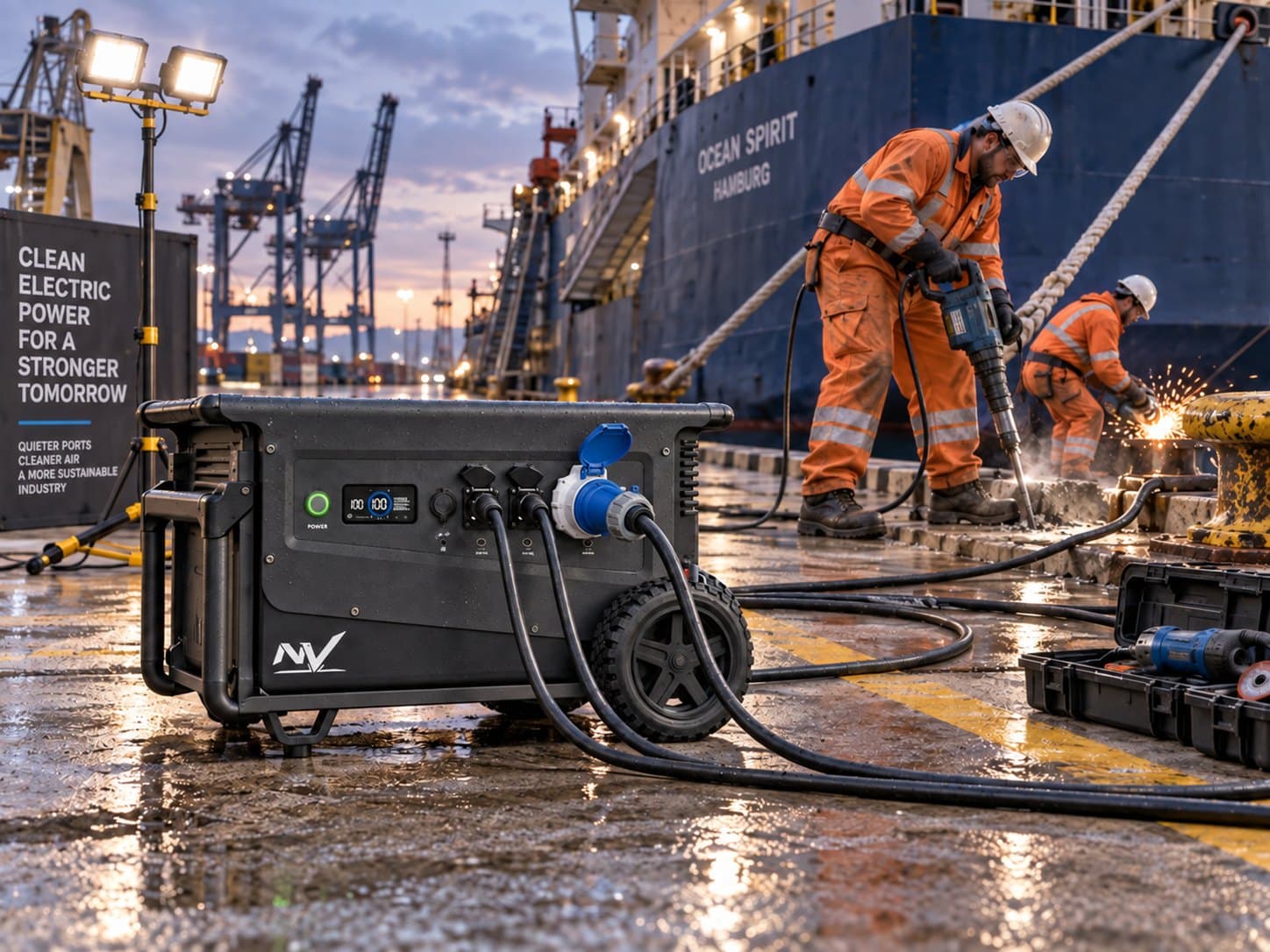
The NV-P36 travels closed in its case: helicopter, pick-up, container. The NV-W50 powers heavy tools, the welder or area lighting on the quay.

The NV-W50 recharges overnight from the site grid or from solar panels, and sets off again in the morning without refuelling.

Worked example

160 A MMA welder (3,500 W at the arc): 1 h 13 of actual arc time on an NV-W50, i.e. half a day of real welding work.

Runtimes calculated on 85% of rated capacity.

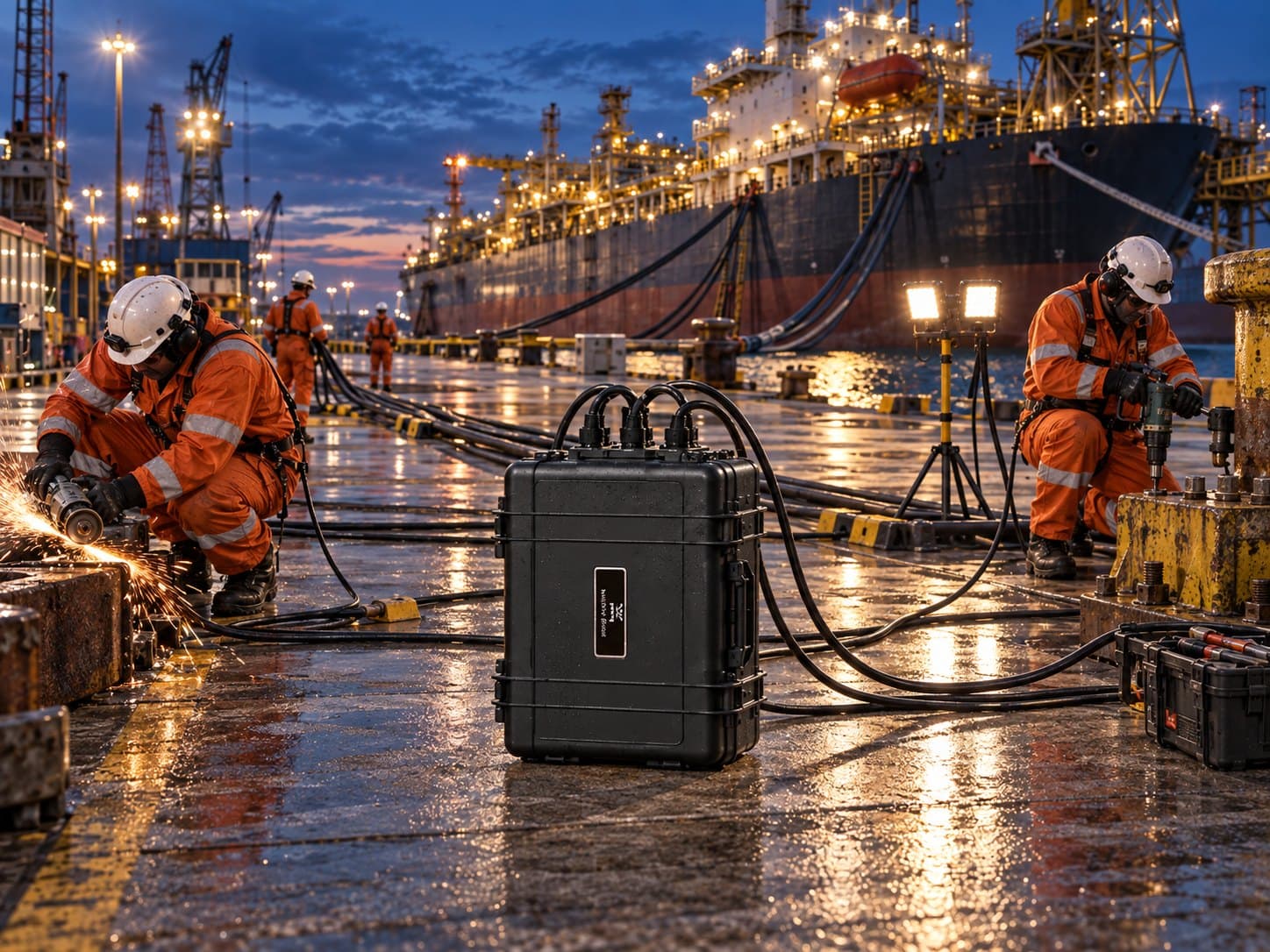
Welding on deck, with no fuel on board.

At sea, most welding is done with coated electrodes (MMA), using small inverter sets of 3 to 5 kg, from 100 to 200 A, running on 230 V. No shielding gas, a stable arc in rain and wind, a set you can carry up high. What it needs is a power source that follows the welder wherever the ship has no electrical panel: on deck, in a hold, up high.

Welding on deck, with no fuel on board.
Illustration: not a contractual representation.

The right order of magnitude

A 200 A MMA set draws about 5 kW while the arc is struck. The arc only takes 20 to 30% of working time: over an 8-hour day, allow about 10 kWh per welder. An NV-W50 with two NV-B5 extension batteries lasts the day; an NV-W50 alone lasts a little under half a day and recharges in about 2 h 30 from a 230 V socket on board (13 A).
Nothing combustion-powered on deck

A diesel engine-driven welder weighs 300 to 500 kg, takes up a pallet's footprint and requires a fuel reserve on deck. The NV-W50 weighs 68 kg on its wheels and stays on deck; the NV-P36, 34 kg in its case, goes down the ladder and through the hatch. They only draw energy while the arc is struck.

110 V for small tools

On board, drills, grinders and lighting run on 110 V. A 3 kVA 230/110 V isolating transformer connected to the station powers this equipment without changing the crew's habits.

Runtimes calculated on 85% of rated capacity.

Offshore and industry

Illustration: not a contractual representation.

Describe your site, we'll size the system.

Request a quote